


Mitsubishi Tensei 1K Pro Blue Golf Shaft Review
 By Russ Ryden, Fit2Score, A Dallas Fort Worth Club Fitter & Builder
The Highlands Performance Golf Center, Carrollton Texas
Golf Digest Certified America’s 100 Best Club Fitter

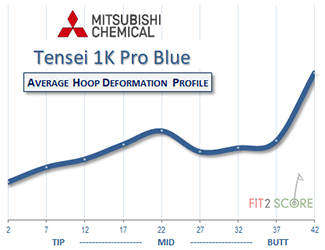 The Mitsubishi Tensei 1K Pro Blue joins the Tensei 1K Pro White and the Tensei 1K Pro Orange reviewed earlier. The 1K carbon fiber replaces the CK, Carbon Kevlar woven material used in the earlier CK Pro version of this shaft. It is reported to be lighter and more consistent. Like the earlier CK weave the 1K weave significantly reduces hoop deformation of the shaft where the wall thickness is thin and is easily deformed.
Mitsubishi, unlike other shaft companies is vertically integrated. They make their own resin and carbon fiber which is combined into prepreg, the material that makes up the walls of golf shafts. They were first with high density prepreg, reducing the resin content by using high strength thin fiber. And despite the claims of other shaft companies to have the most shafts in play on tour, MCA’s 595 Win Count (as of this writing) is hundreds ahead of the nearest competitor. MCA has held that lead for as long as i have been fitting. The CK weave and now the 1K weave are the only weaves I have seen that significantly reduce hoop deformation just below the grip of a driver shaft. And that translates into overall tighter dispersion.
To continue reading this section of the review, you must be registered at a higher level membership.
Russ

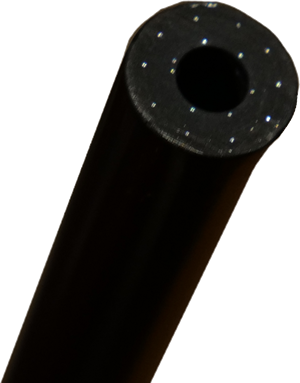 The KuroKage XD has a dual wrap of Titanium Nickel prepreg in the tip as you can see in this image. Titanium Mickel (TiNi) is an elastic wire that immediately springs back to its original shape when stretched. It is used to increase the tip stability of the shaft. If a single wrap is good, as illustrated by multiple PGA Tour wins, Then a double wrap should be better. This is one of an array of that tip reinforcements used by Mitsubishi Chemical. The
 When I looked at email this morning there was an announcement from Oban that the AirBurst shaft is now available. I called Ralph for review samples and he told me the protos I had measured last year were the final versions. Much to my delight I was not going to have to spend a half day measuring shafts for the knowledge base and this review. When the TaylorMade M3 arrived in January it went into my bag. Over the last few months I have played a number of 50 gram shafts. The AirBurst was in the bag last month and between storms and cold weather it got played for a few rounds.
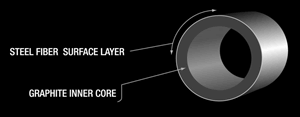 The TI-Fiber driver shafts wrap a braided titanium wire over a filament wound carbon fiber core. This process is explained in greater detail on the
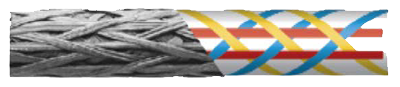
 This is the second release of a Diamana Thump Iron Shaft. The first release, in 2010, was eventually discontinued. At $160 per shaft, or $1280 per set of shafts, there was little interest. I am surprised to see the shaft again being offered. Perhaps PXG’s success at selling uber expensive irons demonstrated there is a market for ultra premium irons.